"Double Self Split", un proyecto de Melissa Marks

El patio del castillo de Vélez Blanco ha vivido múltiples vidas. Es una historia humana y cambiante de fortunas cambiantes, de pérdida y separación, artesanía, arte, conocimiento, humor, ambición y colaboración. Retirado de su contexto original en España en 1904, el patio del castillo ahora reside en Metropolitan Museum de la ciudad de Nueva York. 

Double Self Split” es un proyecto comisariado por Joya: arte + ecología de la artista de Nueva York Melissa Marks. El proyecto consta de dos exposiciones simultáneas en Vélez Blanco, Almería, en agosto de 2016. La prima exposición tendrá lugar en la iglesia de San Luis, del siglo XVI, y constará de 16 grandes cuadros a lápiz, tanto en blanco y negro como en color, expuestos en los dos lados de ocho marcos distribuidos por la nave y los pasillos de la iglesia. La segunda exposición se trata de un gran dibujo realizado sobre el suelo a modo de performance durante un periodo de tres semanas en el Patio de Honor vacío del Castillo de Los Fajardo de Vélez Blanco.

La imagen de los dos castillos que comenzó como una, doblada y dividida, es una invitación sin precedentes conocer dónde el Arte original reside. Si la decoración de mármol que está en el Met representa la “piel” del patio, su “fachada”, la “cara” que da la bienvenida a los visitantes, observadores, y amantes del arte, ¿qué se ha dejado atrás tras su extracción? Sin piel, ¿el patio vacío representa los huesos del castillo? ¿O es que del patio se extrajo hasta su alma? ¿Añade valor artístico e histórico la doble trayectoria de un ser dividido? Si los visitantes y amantes del arte van a cualquiera de los dos espacios, ¿pueden llegar a conocer el alma del castillo? ¿Hay ahora dos almas diferenciadas? ¿Un alma dividida?

El dibujo se convierte en la actividad que asienta la conexión entre alma y mano al servicio de crear una nueva y efímera “piel”. ¿Es posible imaginar una trayectoria futura para el castillo como una fuente regeneradora de arte y nuevas ideas, un desfile feliz de nuevas pieles y almas, para crear un punto de encuentro y concentración de energía que emane de esta ubicación especial? Una trayectoria que celebra su origen al mismo tiempo que invita al cambio.

Ver más

Double Self Split

The patio of the castle of Vélez Blanco has lived multiple lives. It is an utterly human, changeable story of shifting fortunes, loss and separation, craft, art, connoisseurship, humor, ambition and collaboration. Removed from its original context in Spain in 1904, the castle courtyard now resides at the Metropolitan Museum in New York City.

Curated by Joya: arte + ecología, "Double Self Split" is a major project by New York artist Melissa Marks, comprised of two exhibitions shown concurrently in Andalucía, Spain, August 2016. The first exhibition, inside the 16th Century church of San Luis, includes 16 large drawings, monochrome and color, shown recto/verso in eight standing, double-faced frames, distributed across the nave and aisles of the church. The second exhibition is a massive floor painting created on site as a performance over a three week period in the now empty Patio de Honor of the Castillo de Los Fajardo, Vélez Blanco, Spain. 

The image of the two castles that began as one, doubled and split, is a unique invitation to locate where the actual Art resides. If the marble decoration now at the Met represents the patio’s “skin", the public facade, the face that greets the guests, viewers, castle-goers and art-lovers - what is left behind after its removal? Without skin, does the empty courtyard represent the castle’s bones? Or was the courtyard stripped to its soul? Does the double trajectory of a divided self make more art and more history? If the guests, viewers, castle-goers and art lovers show up in either of the two spaces, do they have a shot at meeting the castle’s soul? Are there now two different souls? One divided soul?

Drawing becomes the activity that grounds the connection between soul and hand in the service of creating a new, ephemeral “skin”. Is it possible to envision a future trajectory for the castle as a regenerative source for new art and ideas, a happy parade of new skins and souls, to create a gathering point and concentration of energy that emanates from this special location? A trajectory that simultaneously celebrates its origin and courts change. 

Learn More

"Start Fresh" at Arts Council of Princeton

May 6 - June 24

Melissa Marks is part of the exhibition Start Fresh, a group show about clarity, finesse, energy, surprise, nature, healing and defying expectations in art. The exhibit is curated by Eva Mantell at the Arts Council of Princeton and it brings together startling and fresh works of art by professional artists, alongside that of participants from seven arts and health programs that engage the community in creative dialogue.

A passionate concern for nature pervades the work of included artists: Polly Apfelbaum, Lindsay Feuer, Susan Hockaday, Natalie Jeremijenko, Melissa Marks, and Scott Wright. To celebrate surprise and renewal in art, students ages 15 to 102 from the Arts Council’s Arts in Healthcare programs have created bold prints as an homage to Mary Granville Delany, an 18th Century botanical artist who began her life’s work at the age of 72.

In her Curator’s Statement, Eva Mantell says, “The six artists selected for this exhibit connect to the themes of renewal and growth in diverse ways. From drawing to painting, photography, ceramics, printmaking, performance art, biotechnology and environmental intervention, the range of media rewinds to art’s origins, and fast-forwards into new technologies, as needed. The artists in this exhibit are trained and skilled. They have finesse and a light touch, and keep their art fresh, honest and relevant.”

Read Eva Mantell's full statement here.

startfreshpostcard.jpg

'Joya: arte + ecología' residency, summer 2015

Last July, artist Melissa Marks traveled again to Cortijada Los Gázquez , Vélez Blanco, Spain for her fourth residency with the arts organization Joya: arte + ecología, continuing the series of works and research she has been developing in the area in collaboration with the institution.

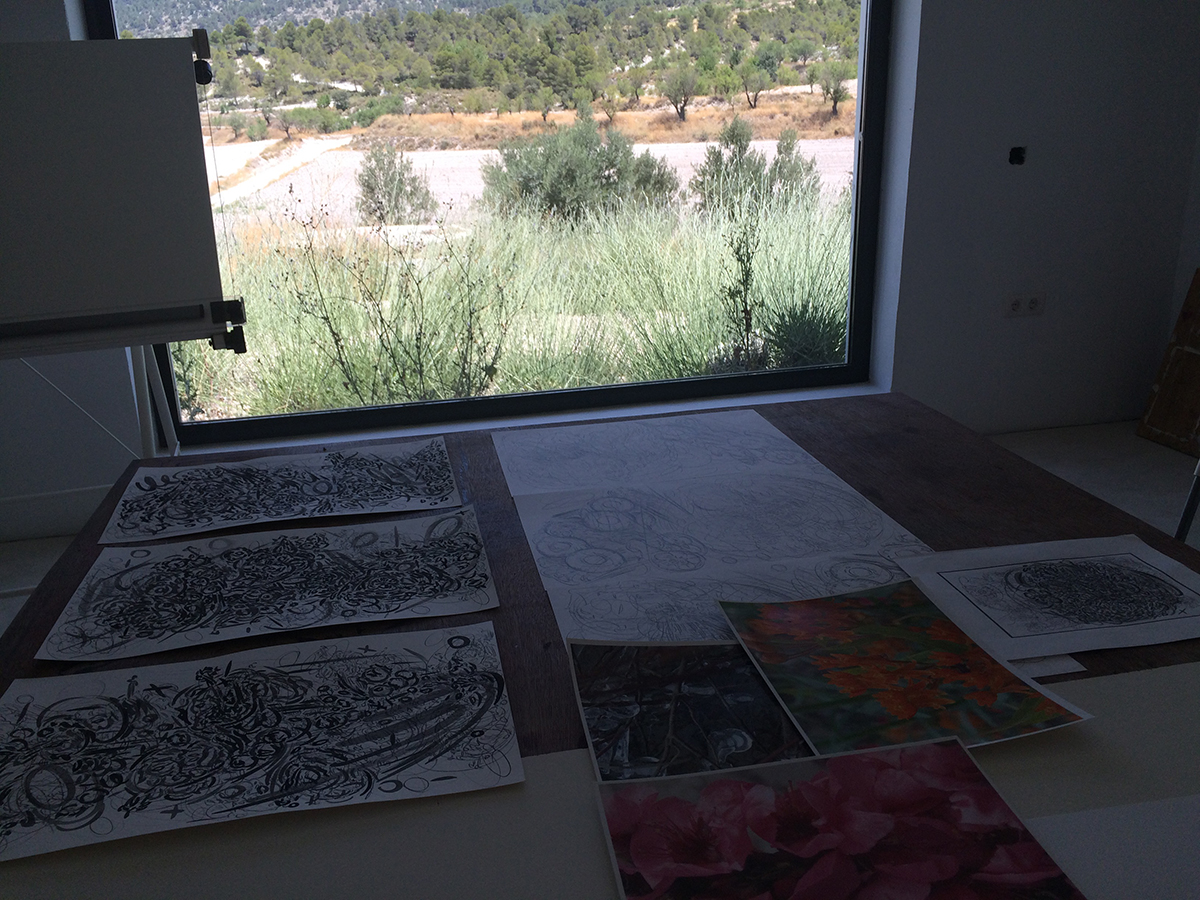
Studio at Cortijada Los Gázquez.

Studio at Cortijada Los Gázquez.

Artist's drawings in the studio.

Artist's drawings in the studio.

Sunburst installation detail.

Sunburst installation detail.

Village of Vélez Blanco, Almería.

Village of Vélez Blanco, Almería.

Castillo de Vélez Blanco. The castle of Don Pedro Fajardo y Chacón stands above the town.

Castillo de Vélez Blanco. The castle of Don Pedro Fajardo y Chacón stands above the town.

Entrance to the Castle.

Entrance to the Castle.

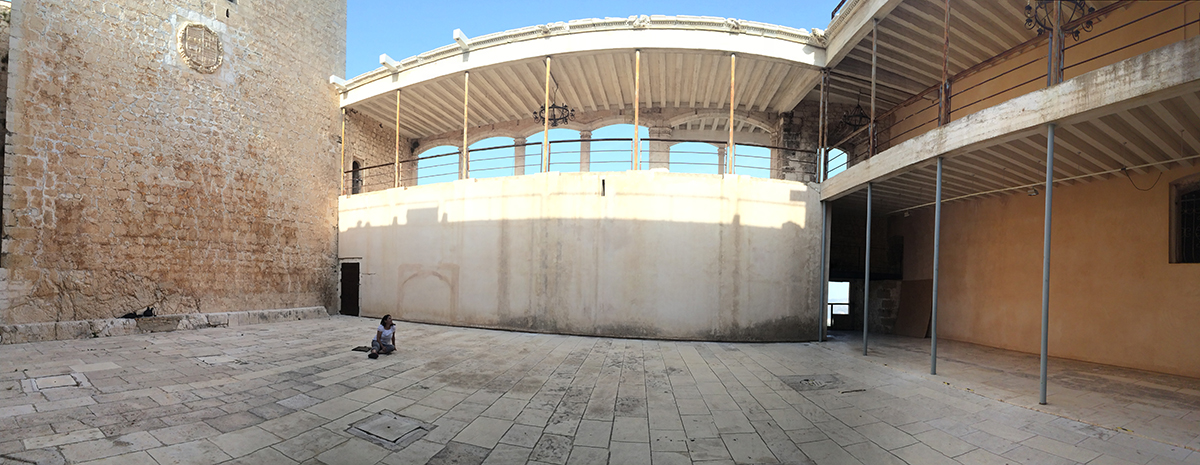
Melissa Marks in the Castle’s “Patio de Honor”.

Melissa Marks in the Castle’s “Patio de Honor”.

Panoramic view of the Patio.

Panoramic view of the Patio.

Melissa Marks and Simon Beckmann (Director of Joya: arte + ecología) in the Convento de San Luis, Vélez Blanco.

Melissa Marks and Simon Beckmann (Director of Joya: arte + ecología) in the Convento de San Luis, Vélez Blanco.